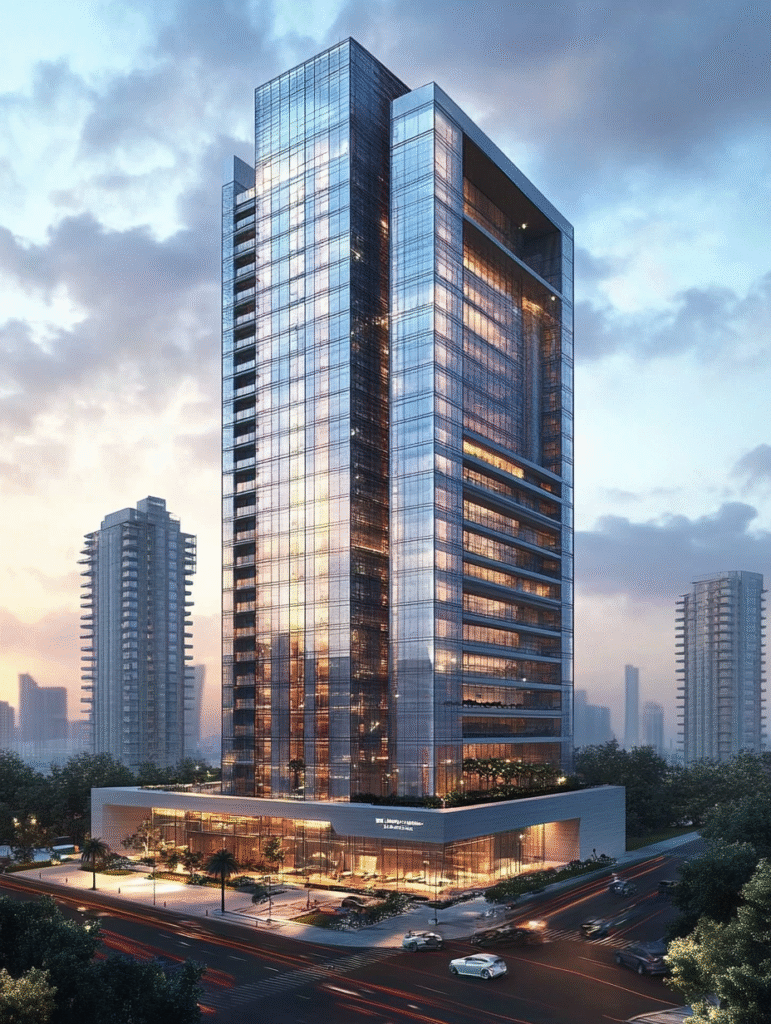
A Developer’s Guide to Building Homes Designed for Tomorrow
Introduction: Why Future-Ready Properties Matter to Developers and Property Portals
The real estate market is evolving at an unprecedented pace. Buyers today are more informed, digitally connected, and focused on long-term value than ever before. For real estate developers and property portals, this shift presents a strategic opportunity to move beyond traditional selling points and position developments as future-proof lifestyle investments.
A future-ready property is designed to adapt to changing technologies, climate realities, and evolving living patterns. According to global real estate research published by PwC, long-term resilience and sustainability are now key drivers of real estate value
https://www.pwc.com/gx/en/industries/financial-services/real-estate.html
In the Middle East—where smart cities, sustainability agendas, and rapid urban growth are shaping the built environment—future-ready design has become a competitive necessity rather than a luxury.
Future-Ready Property Design That Supports Changing Lifestyles
Lifestyle adaptability is one of the strongest indicators of a future-ready property. Across Middle Eastern and global markets, buyer demand is increasingly driven by flexibility. Remote work, entrepreneurship, and multigenerational living are redefining residential priorities.
Future-ready homes are designed with flexible layouts that allow spaces to evolve without structural modifications. This approach aligns with global housing trends identified by the World Economic Forum, which emphasizes adaptability as a core requirement of future cities
https://www.weforum.org/topics/future-of-cities/
For developers, adaptable layouts extend the lifecycle of a project’s relevance. For property portals, highlighting lifestyle flexibility increases buyer engagement and supports long-term search visibility.
Smart Home Infrastructure as a Core Development Strategy
Smart technology has become one of the most influential decision-making factors for modern buyers, particularly in digitally advanced Middle Eastern markets. However, true future readiness lies in infrastructure, not gadgets.
Future-ready developments integrate high-speed internet readiness, centralized wiring systems, and scalable platforms that allow continuous upgrades. Research by McKinsey confirms that smart-enabled buildings improve operational efficiency and long-term asset performance
https://www.mckinsey.com/industries/real-estate/our-insights
From a portal perspective, listings that emphasize smart infrastructure rather than individual devices perform better in future-focused search queries and appeal to tech-savvy buyers.
Sustainable Real Estate Development and Energy Efficiency
Sustainability is now a fundamental pillar of future-ready property development. Governments across the Middle East are implementing green building codes and net-zero targets that directly impact residential projects.
Future-ready homes incorporate energy-efficient envelopes, optimized insulation, and passive cooling strategies—critical in hot-climate regions. The International Energy Agency highlights buildings as a major opportunity for reducing long-term energy demand
https://www.iea.org/topics/buildings
For developers, sustainable design reduces operational costs and regulatory risk. For property portals, energy-efficient features increase listing credibility and attract environmentally conscious investors.
Climate-Resilient Homes for the Middle East and Global Markets
Climate resilience is increasingly shaping buyer and investor behavior. Future-ready homes are designed to withstand environmental stress while maintaining comfort and performance.
In Middle Eastern markets, climate-responsive architecture focuses on heat mitigation, solar control, and water efficiency. The World Green Building Council emphasizes resilience as a core principle of future-proof construction
https://www.worldgbc.org/what-we-do/climate-action
Globally, durable materials and resilient construction methods protect asset value and reduce long-term maintenance costs—key considerations for institutional investors and developers alike.
Wellness-Focused Residential Design as a Market Differentiator
Health and wellbeing are now major drivers of residential demand. Buyers expect homes to actively support physical and mental health, particularly as people spend more time indoors.
Future-ready developments prioritize indoor air quality, natural daylight, and acoustic comfort. The World Health Organization recognizes healthy housing as a critical factor in long-term wellbeing
https://www.who.int/health-topics/healthy-housing
For developers, wellness-focused design strengthens brand positioning. For property portals, wellness features align with lifestyle-driven search intent and increase content engagement.
Future-Proof Homes for Remote Work and Digital Lifestyles
The global shift toward remote and hybrid work has permanently altered housing expectations. Future-ready homes are designed to support productivity without compromising residential comfort.
Strong digital infrastructure, flexible workspaces, and technology-ready layouts are now essential. According to Harvard Business Review, remote work trends are reshaping residential location and design preferences worldwide
https://hbr.org/2023/01/how-remote-work-is-changing-real-estate
Developments that respond to this shift gain a competitive advantage, particularly in business hubs across the Middle East.
Inclusive and Accessible Design for Long-Term Market Appeal
Future-ready homes are designed for longevity, serving residents across all life stages. Inclusive design increases usability while expanding market reach.
Universal design principles support aging in place and multigenerational living, which is culturally significant in many Middle Eastern societies. The Centre for Excellence in Universal Design outlines how inclusive housing improves long-term value
https://universaldesign.ie/
For developers, accessibility reduces future modification costs. For property portals, inclusive listings appeal to a wider demographic and support long-term demand.
Smart Security and Digital Safety in Modern Developments
Security remains a top priority for residential buyers, particularly in premium developments. Future-ready homes integrate smart security systems that enhance safety and convenience.
As connectivity increases, cybersecurity has also become a residential concern. Deloitte highlights digital security as a growing consideration in smart real estate projects
https://www2.deloitte.com/global/en/insights/industry/real-estate.html
Developments that address both physical and digital security position themselves as technologically mature and responsibly designed.
Location, Smart Cities, and Community Connectivity
A future-ready property is inseparable from its surrounding infrastructure. Location, connectivity, and community planning play a critical role in long-term performance.
Across the Middle East, smart city initiatives are redefining urban living. Master-planned communities that integrate technology, sustainability, and walkability align with global smart city standards promoted by UN-Habitat
https://unhabitat.org/topic/smart-cities
For developers and portals alike, aligning properties with smart city narratives enhances long-term relevance and buyer confidence.
Future-Ready Homes as High-Performance Real Estate Assets
From an investment perspective, future-ready homes offer stronger fundamentals. Lower operating costs, higher tenant demand, and regulatory compliance reduce risk and improve returns.
Knight Frank’s global real estate research consistently highlights sustainability and technology as key drivers of future asset value
https://www.knightfrank.com/research
Properties designed for the future outperform those built to outdated standards, making future readiness a powerful investment narrative.
Conclusion: Future-Ready Homes as the New Standard in Real Estate Development
Future-ready properties are no longer optional—they are becoming the baseline expectation for modern buyers and investors. For developers, future readiness protects long-term value and brand credibility. For property portals, it enhances SEO authority, buyer trust, and content relevance.
In the Middle East and global markets alike, the developments that succeed will be those designed with tomorrow in mind. Future-ready homes are not just better buildings; they are smarter, more resilient investments built for long-term success.